


- Article
- Comments (0)
Brajesh Mishra's last rites on Monday
Tags : Brajesh Mishra | NSA | BJP | Atal Bihari Vajpayee |
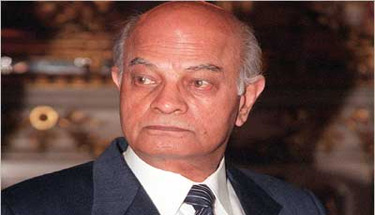 The last rites of Brajesh Mishra, the country's first National Security Adviser who died here following a heart ailment, will be held on Monday.
His mortal remains will be consigned to flames at the Lodhi Road Crematorium at 11am on Monday, a close relative of Mishra said.
Mishra, who would have turned 84 today, was declared brought dead at the Fortis Hospital in Vasant Kunj at around 9.50pm last night.He was suffering from coronary artery problem for some time.
A career diplomat, Mishra was principal secretary to Prime Minister Atal Bihari Vajpayee before he was appointed NSA. He had earlier retired as Secretary in the External Affairs Ministry after having served as India's Permanent representative to the UN.
He had played a crucial role in assisting Vajpayee during the Kargil conflict in 1999.
After the fall of the NDA government in 2004 and the fading away of Vajpayee from the political scene, Mishra distanced himself from BJP and often criticised its stand on various foreign policy issues.
He also batted for the Indo-US nuclear deal when Prime Minister Manmohan Singh was negotiating with Washington and attacked BJP for opposing it. Believed to be the most powerful man in the PMO during Vajpayee's tenure, Mishra had also showed his dexterity as an able troubleshooter.
He had joined the BJP in 1991 only to quit it seven years later to become Vajpayee's Principal Secretary.
He played a key role on several issues relating to domestic and international policies, including forging closer ties with China and bringing thaw in Indo-Pak relations.
He was Special Representative for talks with China to expedite resolution of the vexed border problem.
In November 1998, he became the country's first National Security Adviser, a post he held till May 23, 2004.
|
Brajesh Mishra
The respected he was accorded by the NDA partners and for that matter the Congress led Opposition, accumulated vast powers in him. It may not be a hyperbole, that his role at the PMO surpassed even the cabinet minister’s. Many at that time knew him as the most important man in the country. He chalked out policies and made security plans while dining with Vajpayee on a daily basis.
Even much before that he held very important positions. He was ambassador and India's permanent representative in Geneva and India's ambassador to Indonesia. He was also India's representative to the United Nations from 1979 to 1981 and continued working with the UN till 1987.
But none of these positions brought him as much power as did being the principal secretary to the PM. Interestingly, his father, Dwaraka Prasad Mishra on the other hand was a close associate of Indira Gandhi and Chief Minister of Madhya Pradesh.
During his tenure at the PMO, Mishra was omnipresent in the government machinery. He was not only involved in every major decision taken at the time rather he called shots at the most powerful executive office of the country.
Brajesh MIshra was even instrumental in giving new dimensions to India’s foreign policy, be it relations with the west or the rest. He also played a key role during the country’s decision to go for Pokhran II and later managing the global powers to fight the imposed sanctions in the aftermath of nuclear tests. He also took India's relations with US, China and even Pakistan to a new height.
However, over the last few years since retirement from active life, Mishra severely criticized various policies implemented by the BJP during its tenure at the Centre. He also went on to give some finer details of the Kandahar hijack case in interviews which were earlier kept a secret.
Even after quitting the position of NSA, he remained vocal about his reservations regarding national policies. His importance can be assumed by the fact that the present Prime Minister Manmohan Singh summoned him for a briefing ahead of finalising the Indo-US nuclear deal. Interestingly, after briefing Manmohan Singh he openly endorsed the deal. He also went ahead to contradict BJP's stand on the issue.
Recognizing his contribution to the Indo-US civil nuclear deal, the UPA government awarded him with the Padma Shri in 2011.
|
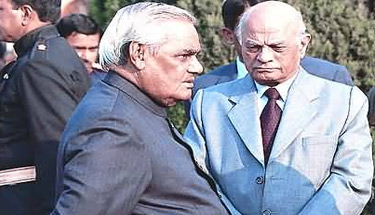 At a point of time in history, he was considered the most important man in the country. Manning the Prime Minister’s Office (PMO), country’s top executive office, Mishra was Principal Secretary to the Prime Minister Atal Bihari Vajpayee and the country’s first ever National Security Advisor. His acumen and diplomatic excellence while earned him the trust of his master and his authority in the corridors of power remained unchallenged during the Bharatiya Janata Party led National Democratic Alliance government at the Centre.
Related Story


 Issue Dated: Feb 5, 2017

